The Ocean Remembers: A major art-science co-commission with the British Science Festival 2026
Turner Sims is proud to be a partner and co-commissioner of the British Science Festival, hosted by the University of Southampton in September 2026.
Through music, sound and scientific research, ‘The Ocean Remembers’ explores the evolving human and more-than-human life of this blue planet; moving across time, through the bodies of ocean dwellers, and bearing witness to our impact on marine life.
For the British Science Festival 2026, Turner Sims – the University of Southampton’s music venue – along with Southampton Marine & Maritime Institute (SMMI) and the British Science Festival have co-commissioned sound artist, composer and nature beatboxer Jason Singh to create a new work responding to four distinct areas of marine and maritime research.
From the lives of fish recorded within their otoliths – a stone in the inner ear (Trueman), the foraging habits of Fin whales (Mestre & Feakes), micro-plastics trapped in coral (Kleboe), to the maritime journeys of people in deep-time (Farr), the atmospheric piece responds to our relationship with ocean life, environmentalism, and our ancient ancestors’ quest to explore new oceans and lands.
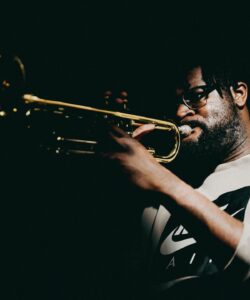
Featuring electronic soundscapes, vocal textures, spoken word and live instruments, ‘The Ocean Remembers’ is a new composition created by Jason Singh in partnership with composer and trumpeter Yazz Ahmed. Ambient moods, crackly electronics, and melodies inspired by Ahmed’s Bahraini heritage, are interwoven with each researcher’s work. The work premiers at The British Science Festival Launch event, performed by Singh and Ahmed, alongside emerging musicians from the University’s Department of Music, student vocalists from Itchen College and MC Baby Panna.
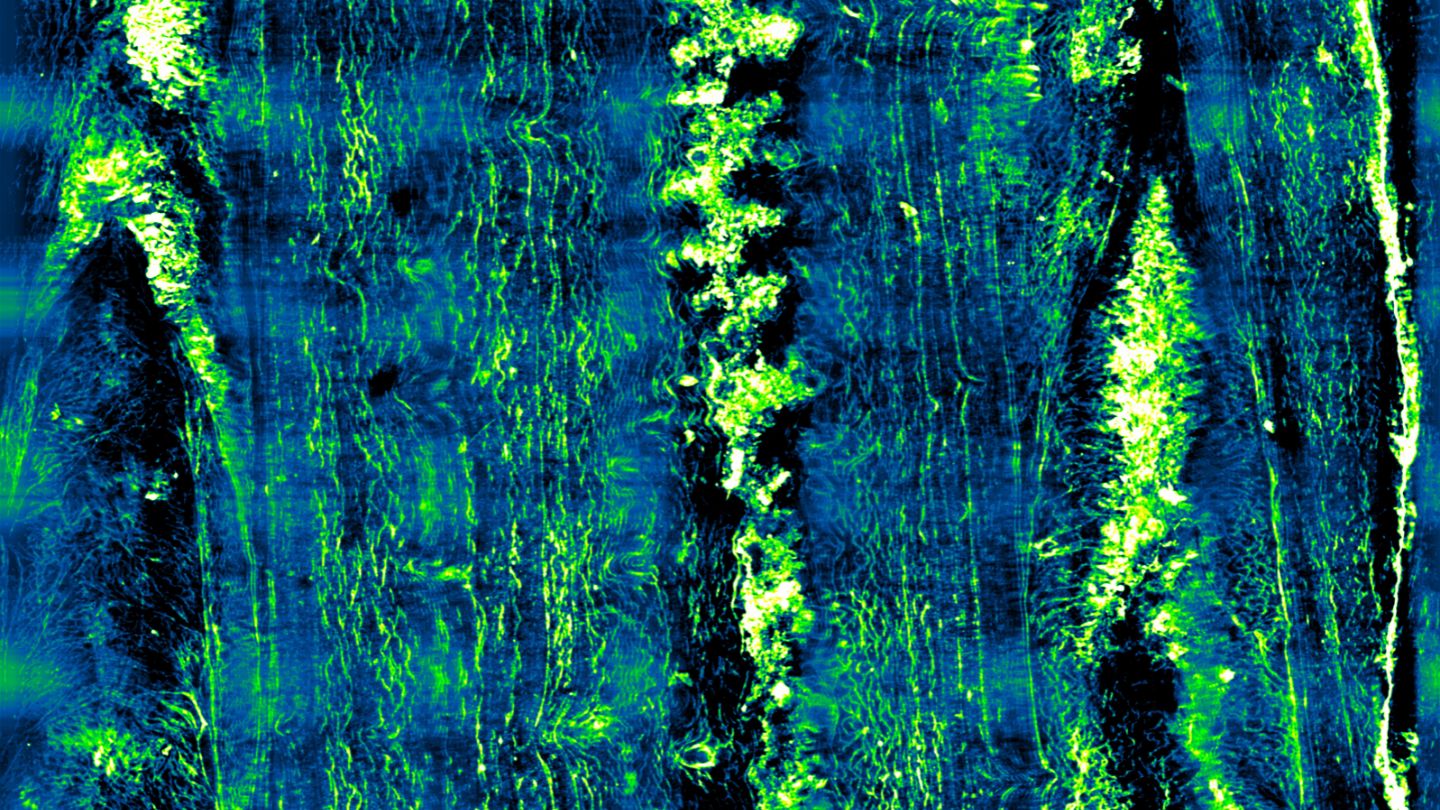
Marine Remixed
Check out the next generation of electronic music producers. Young peoples’ music groups, Music Production Collective and Mix’zine, take the researchers’ ocean recordings and elements of Jason Singh’s ‘The Ocean Remembers’, remixing it for this special electronic music night. Expect live performances, the sharing of new tracks and MCing.
‘Marine Remixed’ is curated and promoted by the Turner Sims Assistant Producers – a group of young people developing skills in programming, producing and promotion and supported by Southampton & Isle of Wight Music (SIOW Music).
Turner Sims Engagement Programme: Jump in the Ocean
As part of Turner Sims Engagement Programme, we’re taking the researchers back to the classroom this summer, to share their marine and maritime research
Working with secondary pupils at four schools in Southampton and the Isle of Wight, the researchers will present their marine work alongside musician and workshop facilitator Fran Lobo, who will lead each class in a songwriting session.
Together these workshops will culminate in new musical compositions inspired by marine research and a new learning resource available for schools, supported by SIOW Music.
Participating pupils will attend an exclusive open dress rehearsal of ‘The Ocean Remembers’ at Turner Sims, part of the British Science Festival’s Schools and Colleges Programme.
Key Dates
- ‘The Ocean Remembers’ (Premier Performance), British Science Festival Launch Event, Wednesday 16 September 2026, Turner Sims, 7pm – 8.15pm: Book your free ticket here
- ‘Marine Remixed’, Friday 18 September 2026, Stage Door, 7.30pm – 9.30pm: Book your free ticket here
- ‘The Ocean Remembers’(Performance), Saturday 19 September 2026, City Art Gallery, 3,30pm – 3.45pm: Book your free ticket here
About the British Science Festival 2026
The British Science Festival (BSF) comes to Southampton this September, hosted by the University of Southampton, with over 100 free events, exhibitions and performances celebrating the people, stories and ideas at the heart of science.
‘The Ocean Remembers’ by Jason Singh and Yazz Ahmed is a co-commission by Turner Sims, Southampton Marine and Maritime Institute and the British Science Festival 2026, in partnership with Southampton and Isle of Wight Music and supported by the University of Southampton.


The Ocean Remembers: Artists and Researchers
Jason Singh is a multifaceted sound artist, nature beatboxer, producer, DJ, curator, facilitator, and performer. His life and work are deeply rooted in the art of listening. He embraces a multi-sensory and cross-species approach to sound and music, constantly exploring the relationships between humans, wildlife, and the environment through audio expression.
Jason’s creative output is a rich exploration of the natural world, club culture, the human voice, public engagement and an extensive range of music technologies. His diverse body of work includes live performances, immersive sound installations, studio recordings, remixes, compositions for film and theatre, deep listening and well-being experiences, sound walks, radio broadcasts, music workshops, podcasts, curated playlists, and immersive DJ sets.
Yazz Ahmed is hailed as one of the most influential trumpet players of her generation. She is an award-winning composer who makes sweeping epics that are rich with storytelling, depicting evocative ancient worlds and mythological muses.
Yazz has led her ensembles in performances across the UK & Europe, and further afield in Algeria, Bahrain, Beirut, Kuwait, Tunisia, Turkey, Ukraine, USA & Canada. She has also enchanted audiences at major festivals such as WOMAD, Love Supreme, NYC Winter Jazz Fest and Montreux Jazz Festival.
Baby Panna is a dynamic artist taking over the jazz-rap scene, bringing a rare and authentic energy to a genre that thrives on expression. Grounded by a deep spiritual focus, he believes music is channelled rather than forced, flowing straight from meditation and staying fully present. This philosophy allows his music to act as a bridge connecting his inner world to his listeners.
His poetic style seamlessly blends rap and jazz, naturally carving out a niche in a competitive genre. He is best known for his track Moonlight, which went viral on TikTok, earning millions of Spotify streams and building a genuine global community.
Panna’s unique blend of sharp lyricism, infectious beats and intimate stage presence has earned him notable chart success, including reaching number 5 in the Korean charts and number 16 in the Czech Republican charts with Moonlight, as well as securing number 38 in the Australian hip-hop/rap charts with his single Heart on the Floor.
Professor Clive Trueman is Professor of Marine Ecology at the University of Southampton. His research has moved between dinosaurs, archaeology and marine biology, always using the chemistry of animal tissues to reveal how animals and people interact with the environment. He studied Geology at Bristol, worked at the Smithsonian Institution and the Weizmann Institute of Science, then took up a lectureship in Portsmouth before moving to Southampton in 2007.
Otoliths, or fish ‘ear stones’, help fish detect sound and act as natural recording devices. Cutting one reveals growth rings showing the fish’s age, growth, physiology and habitat, all hidden in its chemistry. Clive’s research reads these life stories in animal tissues, mostly fish, recovering growth, water temperature and energy use to explore how climate warming affects species like bluefin tuna, and how fish contribute to carbon burial in the deep ocean. He is drawn to the creative process of using science to gain new insights, and the common ground between science, music and art as ways of communicating ideas.
Professor Helen Farr is a Maritime Archaeologist at Southampton’s Centre for Maritime Archaeology, with fieldwork spanning the Isle of Wight to Mauritius, the Mediterranean, Red Sea and Pacific. She has chaired the UNESCO Unitwin Network in Underwater Archaeology and is a keen sailor, commercial diver and Fellow of the Society of Antiquaries of London.
Helen’s research centres on the origins of seafaring in deep time: a story of coastal resource use, exploration and migration through changing climates and seas, and of humanity’s long connection with the ocean.
The work blends sea-level rise, palaeogeography, marine geophysics and modelling with archaeology and archaeogenetics to trace the voyages that carried people into new worlds.
Seafaring history has deep roots, with evidence of hominins island-hopping on simple rafts a million years ago, and voyagers crossing open water to reach Australia by at least 65,000 years ago. As maritime skill and technology developed, more of the ocean was explored, reaching even the most isolated Pacific islands. These deep-time histories are interwoven with the heritage and identity of Indigenous coastal and island communities today, and with enduring themes of exploration, migration, climate change and what it means to be human on this blue planet.
Doctor Julie Mestre is a postdoctoral researcher at the School of Ocean and Earth Science, University of Southampton, investigating the foraging and movement of marine megafauna such as whales, seals and turtles using tracking devices. Her work supports conservation amid a changing environment and increasing human activity. She is also a freelance underwater videographer and scientific scuba diver.
Amy Feakes is a PhD student at the School of Ocean and Earth Science, University of Southampton, using passive acoustics, satellite tracking and mathematical modelling to study the abundance, distribution and behaviour of marine mammals. Her conservation background includes work with ZSL and sea turtles in Greece, Costa Rica and the Maldives.
Julie and Amy both study fin whales in Antarctica using different, complementary methods.
Julie’s research examines the overlap between whales and krill fisheries, using whale tracking data to map where and when whales and fishing vessels compete for krill, informing recommendations to fishing management authorities.
Amy uses underwater microphones, or hydrophones, to record and analyse fin whale sounds, revealing more about their behaviour and distribution, as well as the wider Antarctic soundscape of icebergs, melting glaciers, ships and other marine mammals.
Jacob ‘Jake’ Kleboe is a PhD researcher in Chemistry at the University of Southampton, specialising in marine biophotonics and environmental imaging. His interdisciplinary research combines optical physics, chemical imaging and marine science to study coral biomineralisation and microplastic pollution, using techniques such as Raman spectroscopy and CARS microscopy. He is also active in science communication and public outreach.
Coral reefs are among the world’s most valuable ecosystems, supporting biodiversity, protecting coastlines and sustaining fisheries and tourism. Built by stony corals from calcium carbonate skeletons, they are increasingly threatened by rising temperatures, acidification, extreme weather and pollution.
Among these threats, microplastic pollution is a major concern: the fate of most plastic entering marine environments remains poorly understood, with much of it potentially accumulating within ecosystems and organisms.
Jake’s PhD develops advanced analytical chemistry and label-free imaging techniques, using Raman spectroscopy and multiphoton microscopy to study coral biomineralisation and coral–microplastic interactions. This work aims to improve understanding of coral growth, quantify microplastic accumulation, and explore whether coral skeletons could act as historical archives of marine plastic pollution.