Inclusive music-led performances for all: Interview with MishMash Productions
We speak with Liz Muge, Artistic and Executive Director of MishMash Productions, ahead of their visit to Turner Sims this Autumn.
On 17 October we welcome award‑winning MishMash Productions back to Turner Sims to perform ‘Fishing for Haiku’.
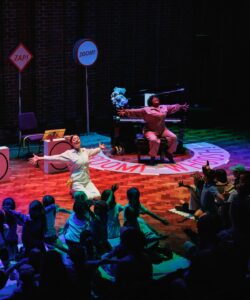
MishMash have become a family favourite at our venue after presenting fantastic performances for children including ‘Toot!’ and ‘Ruby’s Worry’. Known for their incredible musicians, beautiful sets and imaginative storytelling, we are so excited to welcome them back.
In this blog, we catch up with Liz Muge, Artistic and Executive Director of MishMash Productions, to find out more about the company and ‘Fishing for Haiku’.

How did MishMash come about and what did you hope it would be when you first dreamed up the idea?
The idea for MishMash came about when my own children were much smaller and I was looking for shows and performances to take them to. Whilst I was blown away by the quality of the theatre and dance on offer, I could never quite find a similar live music offer. So I applied for some research funding from Arts Council England and spent some time visiting and researching theatre, dance and music for children and young audiences. At the end of that period of research, MishMash and our approach of using elements of theatre practice to present live music was born. In terms of my hopes, I suppose I’d never imagined it could blossom quite like it has, I really just hoped to provide magical experiences of live music for new audiences. I think we’ve done that!
Why is it important to you that children and young people engage with live music?
Music has always been very important to me and sitting in the middle of orchestras and ensembles was always such a special experience for me, one I wanted to try and replicate with MishMash. Giving our audiences a similar experience of connecting, up close and personal, with the music and musicians. I was also very passionate about ensuring audiences felt welcome accessing all types of music; and that’s not always the case. There are some genres of music, and Western Classical music is one of them, that a lot of people feel excluded from and feel like it’s ‘not for them’. And I really want to counter that and bring warm and welcoming experiences of live classical music that enable audiences to make their own minds up and feel welcome in those spaces.
We feel strongly that if audiences engage with the musicians and connect with them as human beings then they’re much more likely to embrace the new music we are presenting.
What do you think are the key ingredients to creating a performance that captures the imagination of children and young people?
For us, working with Western Classical music brings the added complexity that many of our audiences won’t be used to the sound worlds we have on offer and to counter this we want to create experiences where the audiences feel comfortable and connected to the musicians. We feel strongly that if audiences engage with the musicians and connect with them as human beings then they’re much more likely to embrace the new music we are presenting. For us memorising the music is a key part of that. And whilst it’s not common practice for Western Classical music to be memorised and this presents an additional challenge for the performers, by removing the music stands and giving the musicians the freedom to move around we can really build on that connection with audiences.
We also work closely with theatre directors and designers so that we stage and present our performances in such away that the visual presentation supports the audiences to listen and engage. Audiences often worry that they ‘won’t understand’ classical music and by presenting the music visually we are helping them to navigate around the different parts and instruments.
MishMash creates brand new performances, can you tell us about that process and the different people involved?
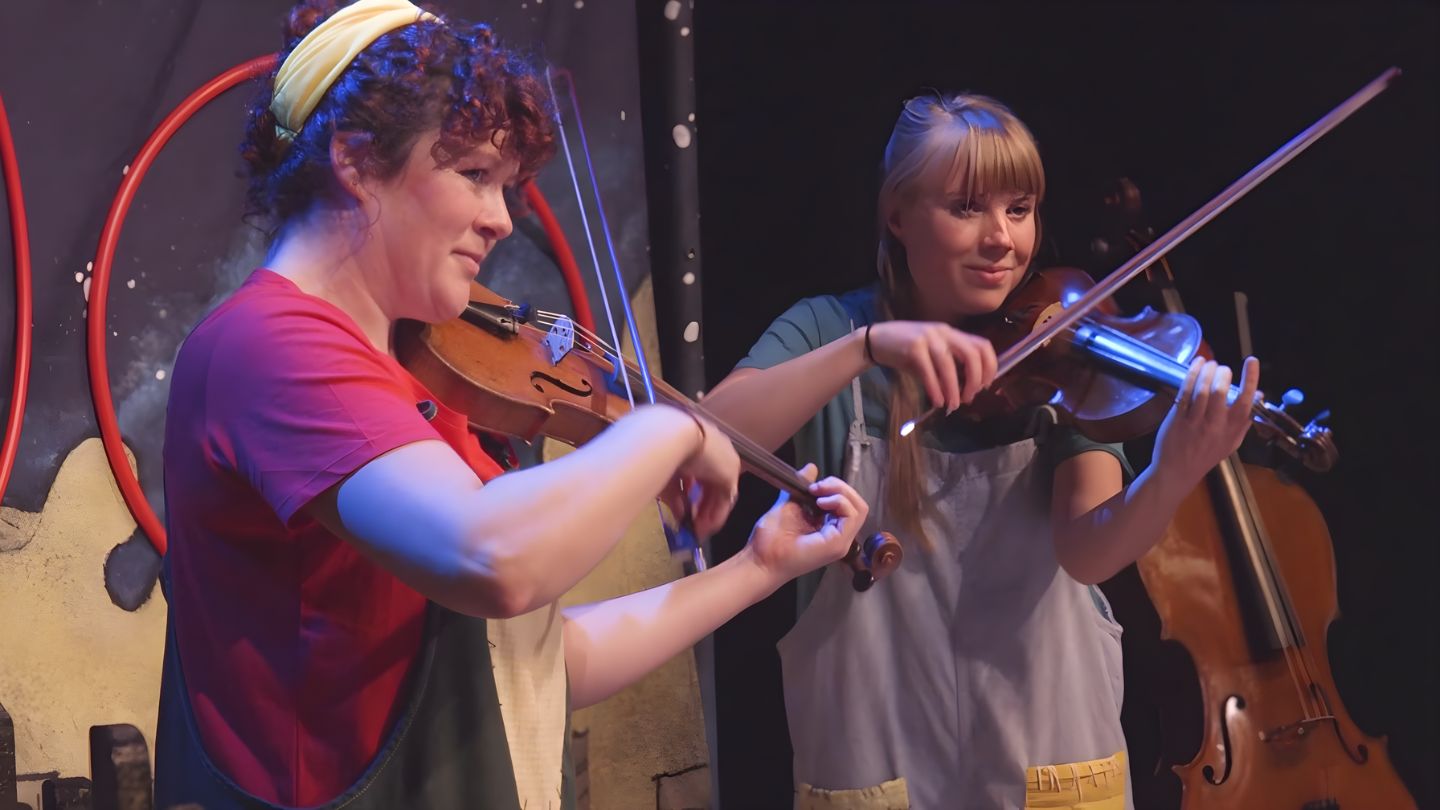
Our productions are all different and the process can vary. For example some of our shows, such as ‘Ruby’s Worry’ or ‘Strange Creatures’, are retellings of popular picture books where we are using the music to ‘tell’ the story. Other shows, such as ‘Fishing for Haiku’, start with the music. As musicians we get in a room together and play and listen to music and decide what really excites us and what we want to share, we then will often build a structure or a thread throughout the different pieces to create a kind of narrative to support what is in affect a ‘staged concert’. This was the approach with Fishing for Haiku. Joanna, Suzanne and Sophie (the Director) all suggested pieces of repertoire that they loved and then played around with stories to help them present the music to the audience.
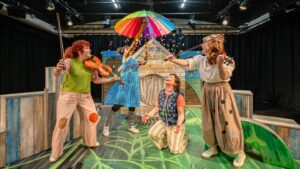
The piece American Haiku by Paul Wiancko is at the centre of ‘Fishing for Haiku’ and has gifted us a wonderful structure for the piece… I won’t give any more away! We always try and bring in the right people to help us finesse our ideas and as well as our wonderful director Sophie Rivlin, we also worked with Designer Bryony McCombie-Smith and Physical Theatre specialist Tom Curzon to realise our aspirations for the piece.
As a company, what do you enjoy about coming to Turner Sims?
We love coming to Turner Sims! Jessica and the team are such champions for music and especially work for children, young people, families and schools. We share very similar values, particularly in how much we care about our audiences, which makes working together a dream. It helps that the hall is also beautiful to play in!
The next performance you are bringing to Turner Sims is ‘Fishing for Haiku’, tell us about this performance and what audience should be looking forward to.
I don’t really want to give much away but ‘Fishing for Haiku’ is such a dream of a show. It’s beautiful and clever but also extremely silly. And we think silliness is really important and sometimes much overlooked! It features such a lovely range of music from contemporary classical to folk music to improvisation to singing frogs…… and Joanna and Suzanne are amazing performers. In short it’s perfect for lovers of great music, and of poetry, friendship, make believe and play!
Book tickets for Fishing for Haiku on Saturday 17 October here.