An interview with Soumik Datta
On Tuesday 3 November, renowned Bengali-born British Indian musician and composer, Soumik Datta begins his 'Melodies in Slow Motion' tour at Turner Sims. After the success of his 8-month tour of India last year, we're excited to welcome the immersive show where biological soundscapes, field recordings and new Indian music collide.
We caught up with Soumik to talk returning to tradition, discovering slow touring and The Waggle Dance of bee colonies. Learn more about his work, the skill and instruments of his band, and their recent experience of touring.
How did Melodies in Slow Motion come about and who was there with you to help bring this idea to fruition?
In 2025, I was in Mumbai on a British Council climate commission, working on the ecological crisis in a city that feels like solid concrete. And then, at a traffic light, chaos all around, horns, heat, noise, an orange butterfly landed on my shirt. In a city built to drown out anything small, this tiny creature found me, and stayed with me for the rest of the walk. It made me feel the scale of everything: how much life exists in the margins we’ve stopped noticing, the small ecosystems we’re still tied to even when we’ve forgotten them. That butterfly is where ‘Melodies in Slow Motion’ began.
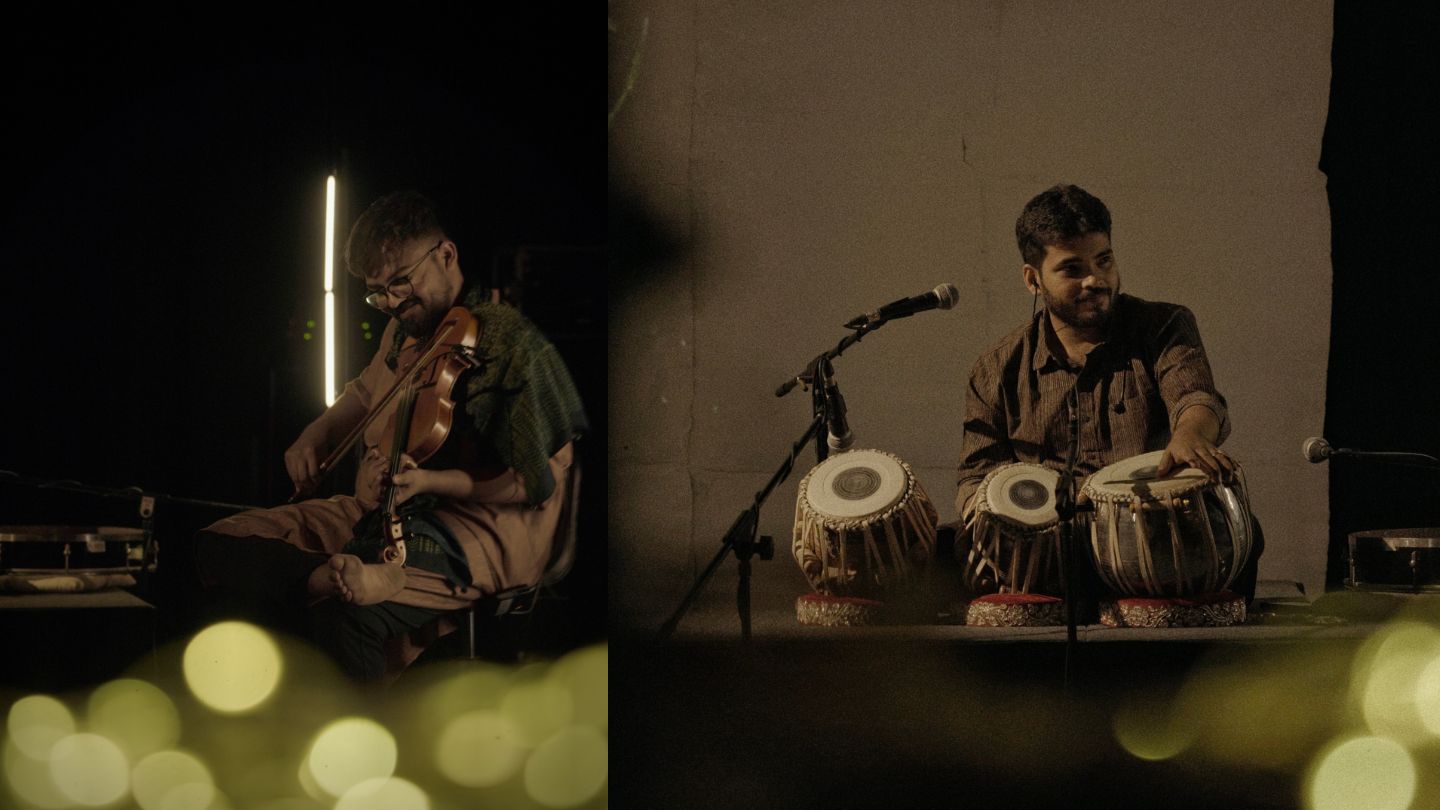
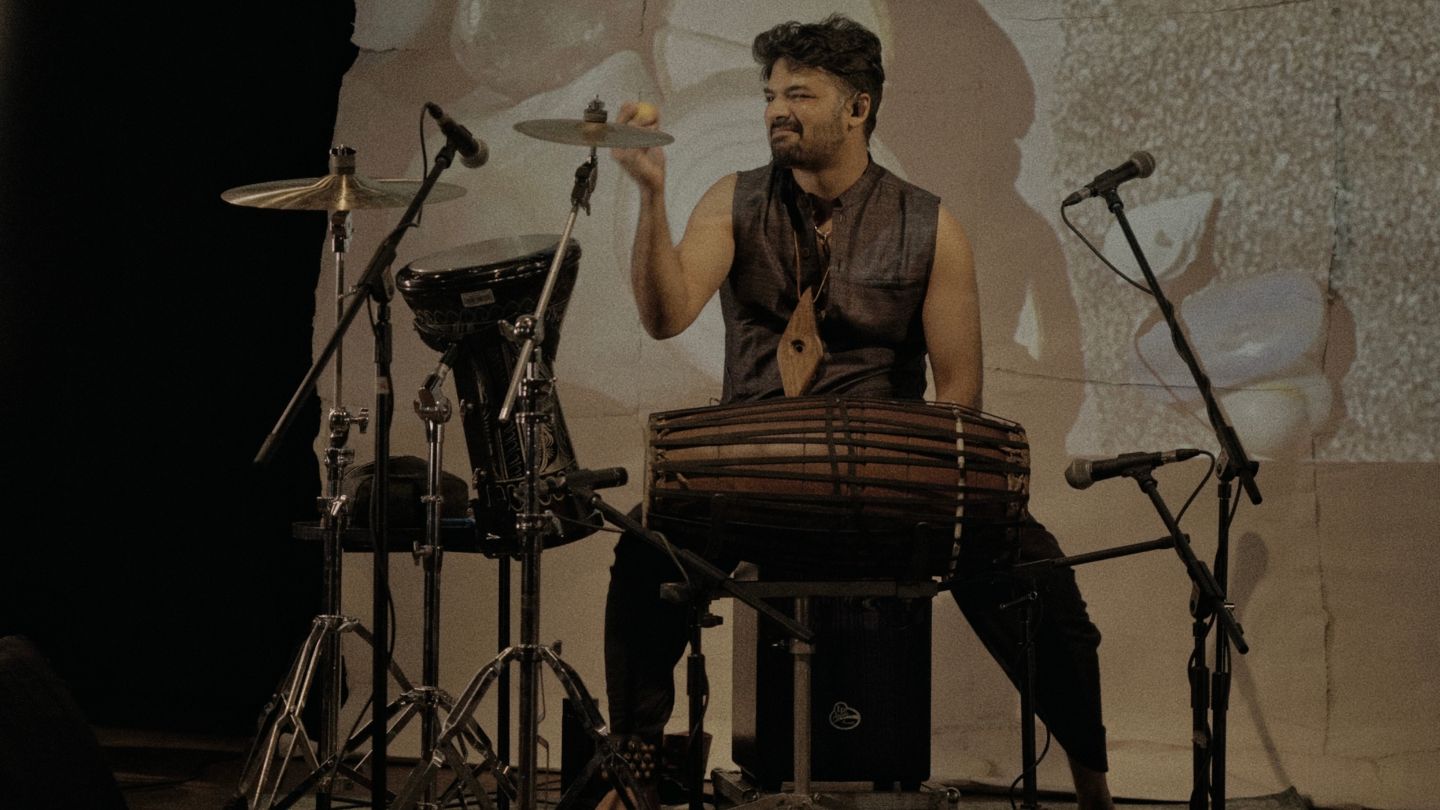
The British Council commissioned the project, and we co-produced it with G5A Warehouse in Mumbai. The people who brought it to life are extraordinary: Sumesh Narayanan on mridangam, Sayee Rakshith on violin, Debjit Patitundi on tabla, and the brilliant field recordist and musician Rahul Nadkarni, who captured sounds most of us have never had the chance to hear.
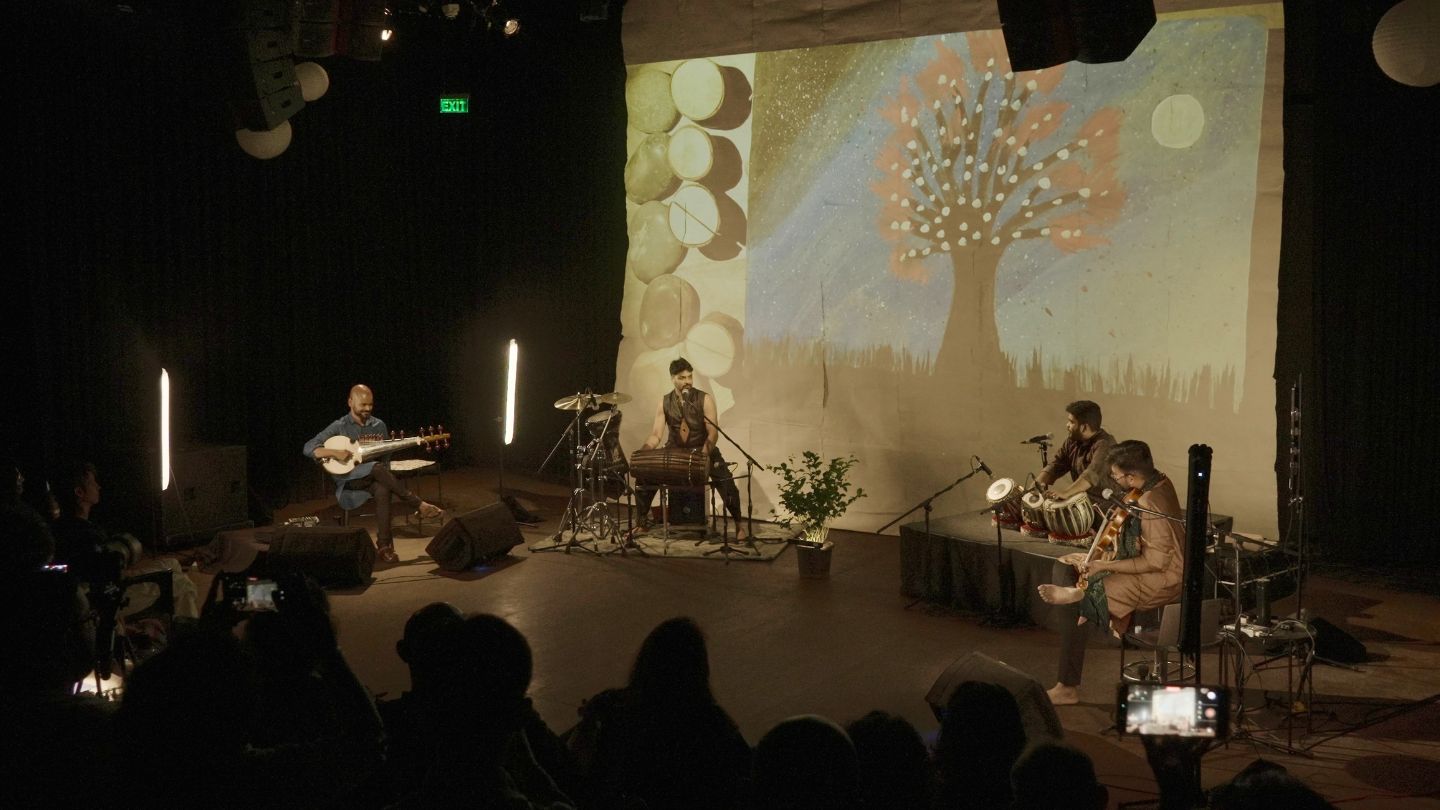
How does the band’s specific combination of instruments fuse together to produce such an immersive experience?
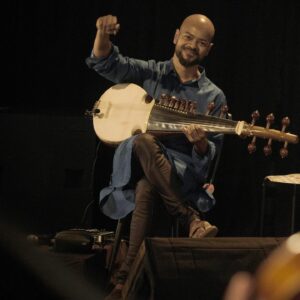
The sarod sits at the heart of everything: 19 strings, with a resonance that can feel almost geological. Around it, the mridangam and tabla provide an intricate rhythmic pulse that mirrors the way the natural world operates: in patterns, in cycles, in rhythms that Indian classical percussion understands instinctively. The violin acts as a bridge between that classical framework and something more cinematic.
But what makes this band different from anything I’ve done before is the fourth layer: Rahul Nadkarni’s field recordings. He used specialist microphones to capture things you’d never normally hear: the inside of trees, under the mangroves, the dance of bees. Those recordings aren’t texture or decoration; they’re compositional. The natural world becomes another voice in the band, and through it we get to reveal some of nature’s most extraordinary secrets: the waggle dance as a language, the impossible lifespans of cicadas surviving underground for thirteen or seventeen years, the way a murmuration of birds moves as one mind. These are mysteries most audiences have never been invited inside before, and that’s exactly where this music takes them.
The natural world becomes another voice in the band, and through it we get to reveal some of nature's most extraordinary secrets..."
What was it like working with Rahul Nadkarni while curating this tour? Was integrating field recordings a new experience in your work as a musician?
Working with Rahul changed the way I think about what a musical instrument actually is. He goes to places most of us never think to listen to: underground, into ecosystems, into environments teeming with sound, and brings those sounds back with extraordinary care. He has a field recordist’s precision and a musician’s ear, and that combination is rare.
What drew me to working at this depth was a growing curiosity about the hidden languages of nature. The waggle dance: the way bees choreograph precise information for an entire colony is just one example of how much intelligence and communication exists in the world around us, completely beyond our normal perception. Rahul’s recordings open that world up. Integrating them at this level was new for me, and it fundamentally shifted how I think about composition. The natural world isn’t a backdrop to this music – it’s a co-author.
The performance spotlights Earth’s hidden rhythms and biological landscapes, do you have a favourite that we can look out for?
The waggle dance. Bees communicate through a remarkable figure-eight movement – scout bees return to the hive and perform a dance that tells the whole colony exactly where to find food, how far away it is, even what direction to fly. It’s a language. A choreography. When we started working on the music for it, we asked: what would that dance actually sound like inside the hive?
The rhythm is fast, almost trance-like, and the main melodic hook takes a while to emerge – deliberately, so the energy can build. When it finally arrives, it feels like an anthem. I find it genuinely moving that this hidden language has existed for millions of years, and most of us walk past it every day without knowing. You can hear Waggle Dance on all platforms now and watch us play live on Youtube.
You embarked on an 8-month tour of Melodies in Slow Motion in India, with a focus on intimate and meaningful spaces like schools and heritage sites. Did the band’s performance shift throughout this experience, and what will you be bringing along with you on this next leg of the tour?
Enormously. Alongside the larger concerts, I set out to explore what I’m now calling slow touring, spending real time in schools, community hubs, care centres, orphanages, and colleges, sharing the sarod in intimate settings where people could hear every detail. We’d sing together, play clapping rhythm games, just be in the music together.
This was partly inspired by the neuroscientist Daniel Levitin, who writes about music as one of humanity’s oldest tools for social bonding – something early human groups used to connect long before complex language existed. On big festival stages, there’s a distance between you and the audience. In those smaller spaces, that distance disappears entirely, and there’s a different kind of magic.
What I’m bringing to the UK is everything those eight months taught me – a show that’s been genuinely tested in the rooms that matter most. The community week across South West England, taking the music into mental health centres, and elderly care spaces like Bristol Folk House is as essential to me as the Kings Place shows. Music belongs in both places equally.

Listen to audience reaction after experiencing 'Melodies in Slow Motion'
What do you hope UK audiences will take away with them after experiencing Melodies in Slow Motion?
Between the four of us, we wanted to explore our roots in Indian classical music – the tradition that grounds all our training – but through the lens of the living world. We looked at rhythms in nature: fireflies synchronising their flashing, the ebb and flow of intertidal mangroves, the internal clocks that govern circadian rhythm. And this connects back to something the ancient Indian classical musicians already understood: that our mood and psychological states shift with the changing light of the day. By mapping frequencies and ragas to those changes, they weren’t just creating music – they were creating a sonic mirror for the human mind.
We’re returning to those roots. To a tradition where mind, body and environment are connected – to the natural world, and to the tiny creatures living all around us. I want people to feel that interconnection. I want them to feel the joy of standing inside a beehive, or in a field lit up with fireflies. Ultimately, I want them to feel less alone – to feel that we belong to a shared world, one that still needs looking after.
Don’t miss Soumik Datta | Melodies in Slow Motion at Turner Sims on Tuesday 3 November, 7.30pm